cart / horse
Surprise surprise I got ahead of myself again and thought of form (zine! anthology!) and totally froze myself. Rededicating myself to working in / on whatever interests me in the moment and taking it day by day, minute by minute: shaping scrap metal, joining words together, drawing little index card cartoons of myself every morning, writing these things at midday. Not to say I won't pursue longer form or longer term works (longform doesn't always mean long term) but I won't set out to do so or assign it / them deeper value to my day and life than that. Make, release, make, release, make release...
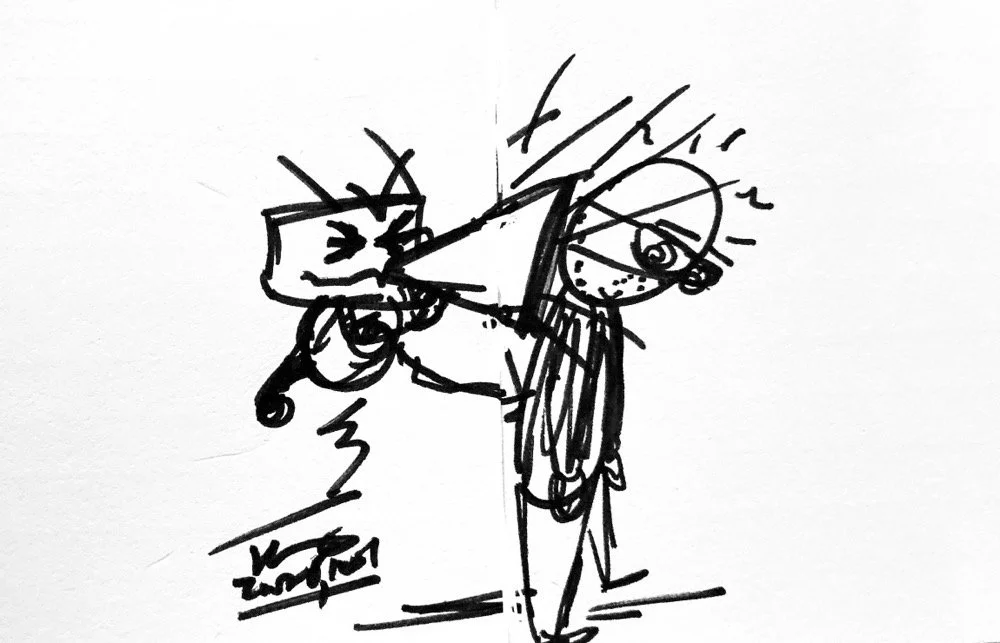
earbliss_20250930
The world may be shit but at least there’s new Neko Case music in it.
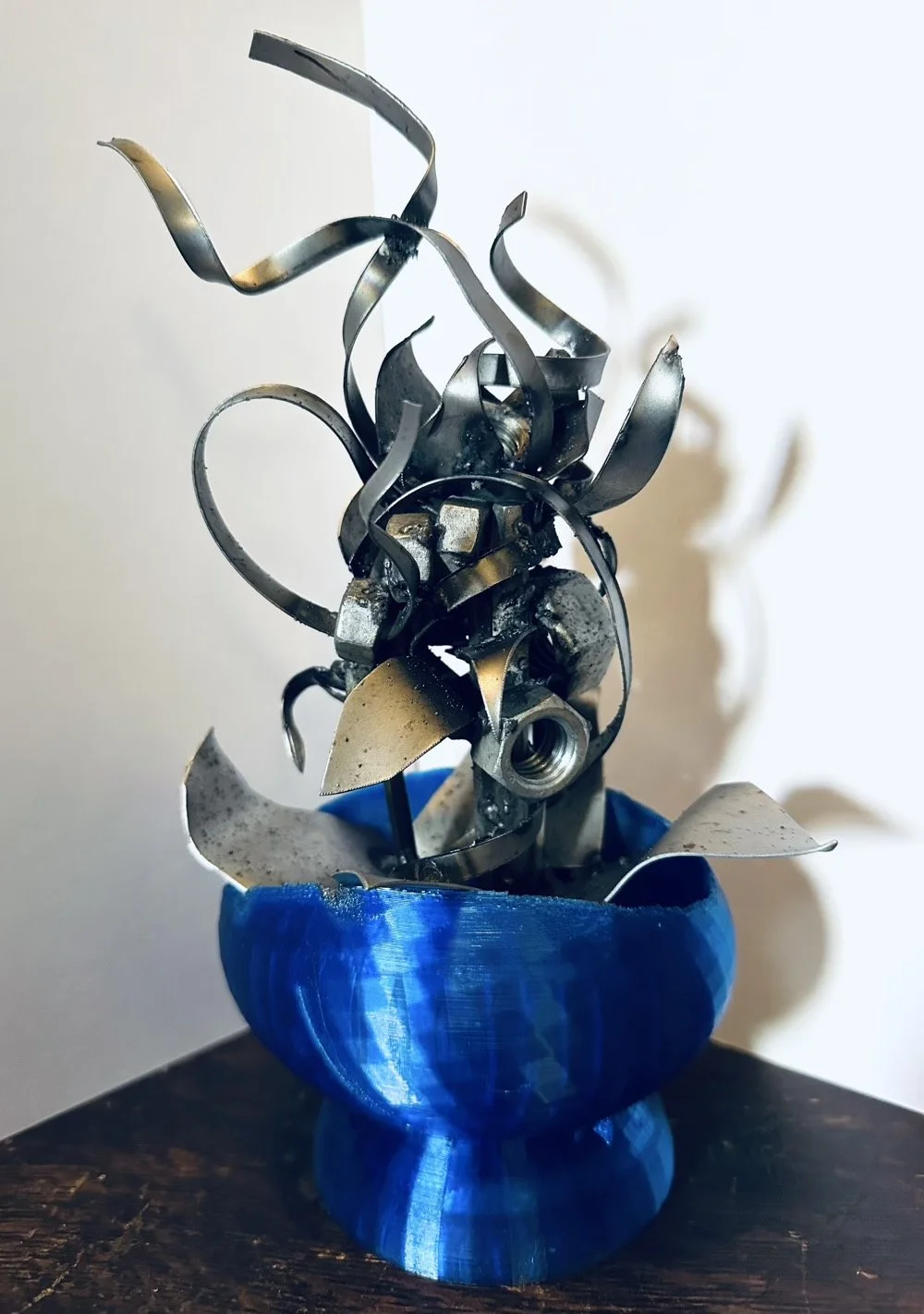
metal_0053
A quick return to my imaginary metal plants with custom-designed 3D pot for a teacher colleague of K's. Nice diversion from the brain-melting of current WIP. Pure creation, one piece leading to another - sculptural jazz, for lack of a better phrase.
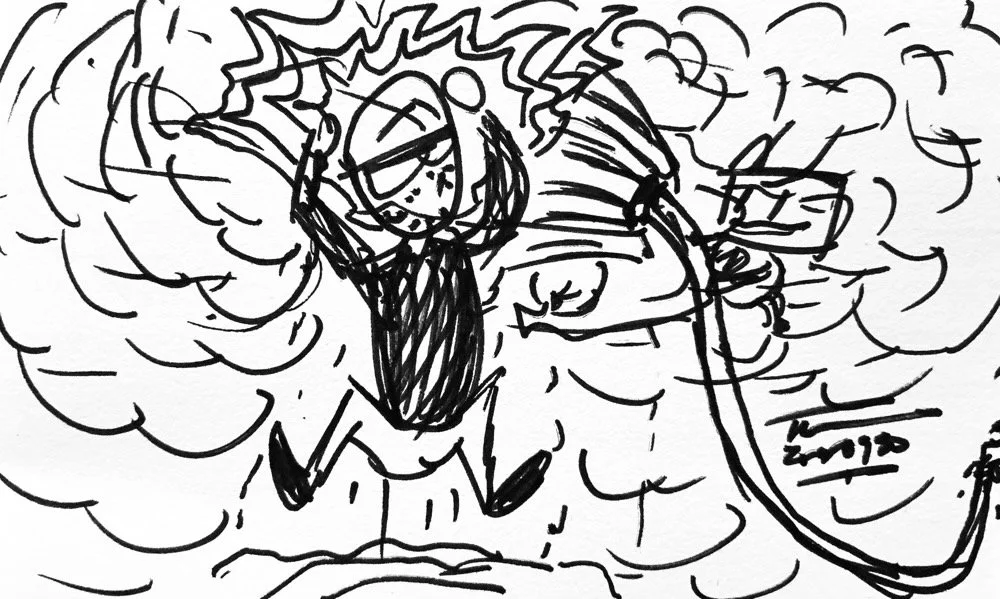
resiceptance
While nuHerbie the insulin pump (second one, first Herbie was felled by a recycling dumpster corner) been life-altering – in 99.9% good ways – the .1% has been a source of frustration and confusion since day one: on some days, I'm able to get in a good four mile run before I become a hypoglycemic mess, on others, barely a mile. No matter the settings, no matter if I use exercise mode, or how much insulin I take, vexation. Though it's taken me awhile – nuHerbie and I are heading towards our third anniversary of symbiotic collaboration to keep me not dead – I've finally landed on a solution: give up on distance, focus on intensity. Get what I can get out of the run and call it good enough; can't decide if it's resignation or acceptance (still sussing out the difference). Probably both. Resiceptance.
Japanese Metabolism
via Wallpaper
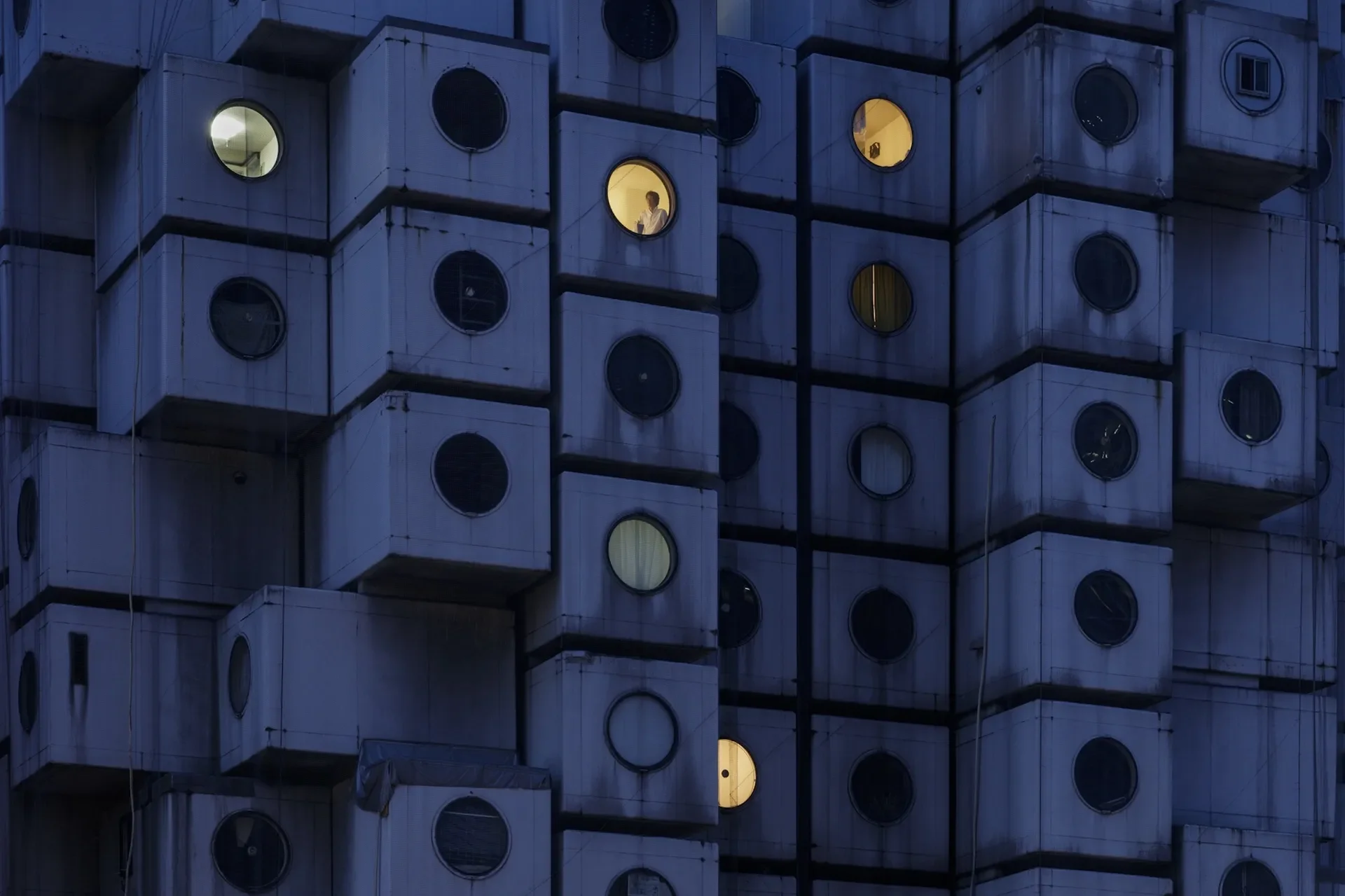
Metabolism’s genesis as an architectural tool for social change was defined by the times. It was in the 1950s that the seeds of the movement were first planted amid the ashes of Japan’s widespread post-war urban annihilation and subsequent renaissance.
As Japan’s recovery journey gathered pace, a string of young architects in Tokyo – including Kisho Kurokawa, Fumihiko Maki, Kiyonori Kikutake – were deeply drawn to explorations of flexible, modular and organic urban design, with inspiration rooted in biology, technology and futurism.
Soon after, Japan was on the brink of enormous economic growth. A few years later, in 1964, Japan hosted the Tokyo Olympics and launched its first shinkansen bullet trains – a seminal moment that confirmed to the world its reinvention from war-hit nation to global leader. Added to the mix was a rapidly growing population – all combining to create the perfect conditions for questioning how to reorganise a fast-evolving urban society for the future.
At the same time, ideas of renewal and impermanence have also long been timelessly ingrained across traditional Japanese culture – from its Zen Buddhist philosophies and aesthetics to its ritual of rebuilding Ise-Jingu, one of Japan’s most important shrines, every 20 years.
buffalo measuring
Today at least is going to be spent flapper-disking the next big metalwork project which has now morphed into one and a half metalwork projects (ad has made the project that it was going to be become something else entirely further on down the road) because, as Brad Bird's favorite axiom goes, Use every part of the buffalo. This one's going to push me further into woodworking, for which I've yet to find a genuine, visceral love: if (my ignorance-fueled iteration of) metalwork is more like cooking, throwing ingredients into a pot to make something new and tasty, then woodwork is more like baking, precise measurements required to make the pieces fit, measure twice cut once, stir stir stir. Then again, 3D printing is very similar to baking – I do, after all, jestingly refer to my printer as an easy-bake oven. I guess it's not so much that I dislike woodworking (I don't, not at all) but that I don't find it as harmonizing with the type of creativity that makes me feel whole. I admire those that do it well and make beautiful things with it, but I get far more creatively turned on by seeing a rusty spring than I ever could a beautiful piece of timber: both have their place but the latter requires a creative vein which I've yet to tap into.